Digital coupons moved retail promotions out of the Sunday newspaper and into retailer apps, but they also cut the link between the offer and the shelf. Shoppers clip offers days before a trip, then forget them in the aisle. In this episode of The Middlemen, Tom Limongello and Todd Sawicki talk with a promotions veteran who argues that the biggest in-store retail media opportunity is not big video screens at the front of the store, but the sponsored product ad brought to the moment of purchase.
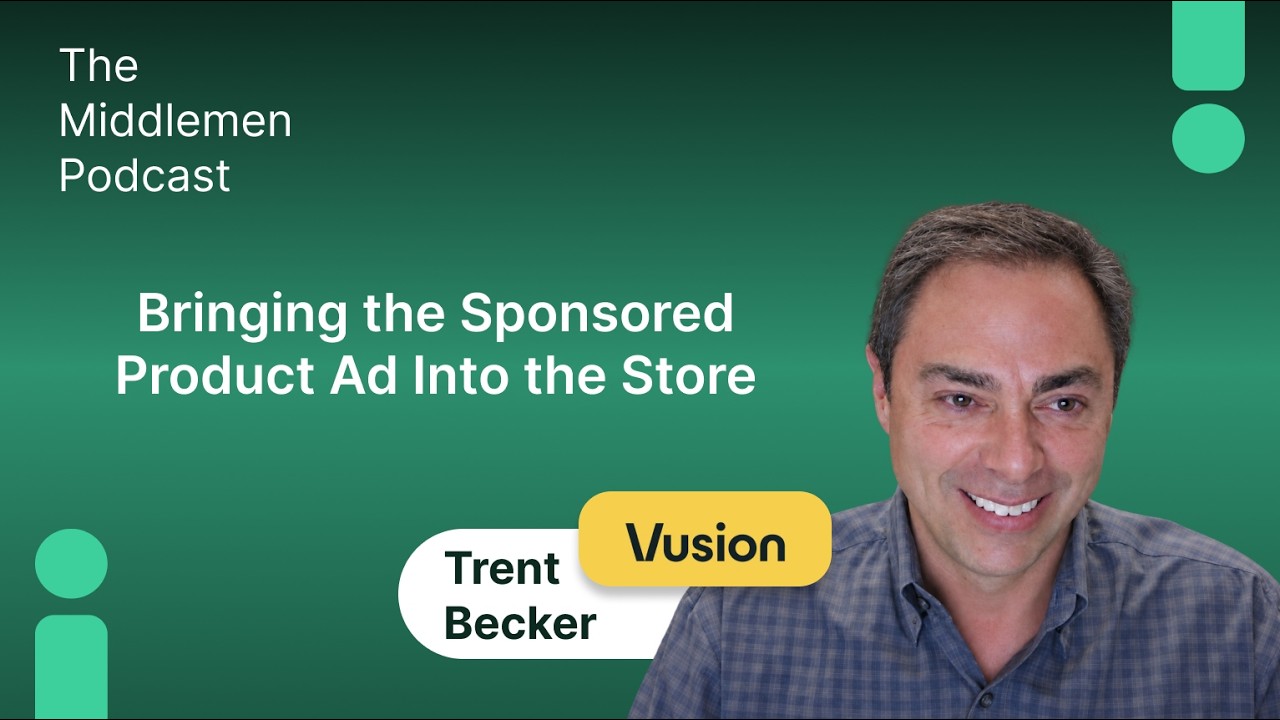
Trent Becker is VP of Growth at Vusion. He started on the CPG brand side at Unilever, spent about eight years at Valassis in the freestanding insert business, when 60 million coupons landed on doorsteps every Sunday, and worked at MyWebGrocer before joining Coupons.com, which became Quotient. There he and Tom helped build retail media networks for Albertsons, Dollar General and about a dozen other retailers. After a stint at Ibotta, he joined Vusion about a year and a half ago. Vusion is best known for electronic shelf labels, a category it has led globally for nearly 30 years, and it now combines IoT, computer vision, cloud software and digital displays. It recently acquired InStore Media, a Barcelona-based company with a strong presence in Europe and Latin America that brings brand relationships and campaign expertise, though it is not yet available in the United States.
Becker says different store formats serve different purposes. Video works for storytelling at entrances and destination categories, but a simple, relevant offer next to the product is often worth more. Vusion's e-paper displays are battery powered and low maintenance, so they do not need electrical runs to every location. That opens placements that were too difficult or expensive to digitize, including end caps, floor stands, checkout areas, freezer doors and even outdoor spots. He sees two opportunities: replacing printed signage that is costly to produce, labor intensive to install and often left up after a promotion ends, and giving brands formats for retail media that range from small shelf displays to larger promotional boards.
The promotion problem is personal for him. Twenty-five years ago at Unilever, a retailer plan tied a temporary price reduction to an FSI coupon and in-store signage, and the team could estimate how many incremental cases it would move. Today retailers run hundreds of digital offers at once, each expiring on a different day, which makes them nearly impossible to support with printed signs or circulars. Displays that update remotely can show shoppers the savings they qualify for when they are deciding, and brands can sponsor those offers for more visibility at the point of purchase.
Becker insists the merchant still owns the shelf, and that media should make the shelf more productive rather than take it over. His example is an aisle-entrance board promoting $50 in digital coupon savings on paper products, showing the net price after a strong TPR and digital offer, to win back shoppers who buy the category elsewhere. Retail media networks tend to report impressions, ROAS and media revenue, he says, while merchants care about category growth, incremental units, profitability and market share. Connect in-store media to those merchant metrics and it stops competing for shelf space.
He also flips the usual direction of travel. Instead of spending offsite to drive shoppers into stores, the store can drive shoppers into the retailer's app. A QR code on a larger screen, or a color change and code on a two-inch shelf label, can load an offer straight to the shopper's account. For retailers without a traditional loyalty card, such as Dollar General, Family Dollar and Grocery Outlet, that engagement builds first-party data. Vusion's Bluetooth-based labels and sensors can also flash LED lights to guide shoppers and associates to products, a capability Walmart has rolled out since Vusion won its business around 2023, and one shoppers have been filming and posting on YouTube. Becker says it feels like finishing what he and Tom started at Quotient.
Looking ahead, Becker sees room for regional brands selling in 50 or 100 stores that invest in trade but have never had access to retail media budgets. Offer infrastructure from Ibotta, Inmar and Neptune already exists, so the job is to connect it to the store and keep activation as simple and affordable as a trade promotion while adding digital measurement. He notes that roughly 60 to 65% of last year's US retail media spend, which he puts at around $60 billion, went to sponsored ads because the shopper is making a purchase decision. Movable e-paper screens, in his view, bring that same sponsored ad into the store and open a much bigger budget for retail media networks. The episode is sponsored by E Ink.


We're here to explain the most confusing topics in retail media, ad tech, mar tech and e-Commerce.